





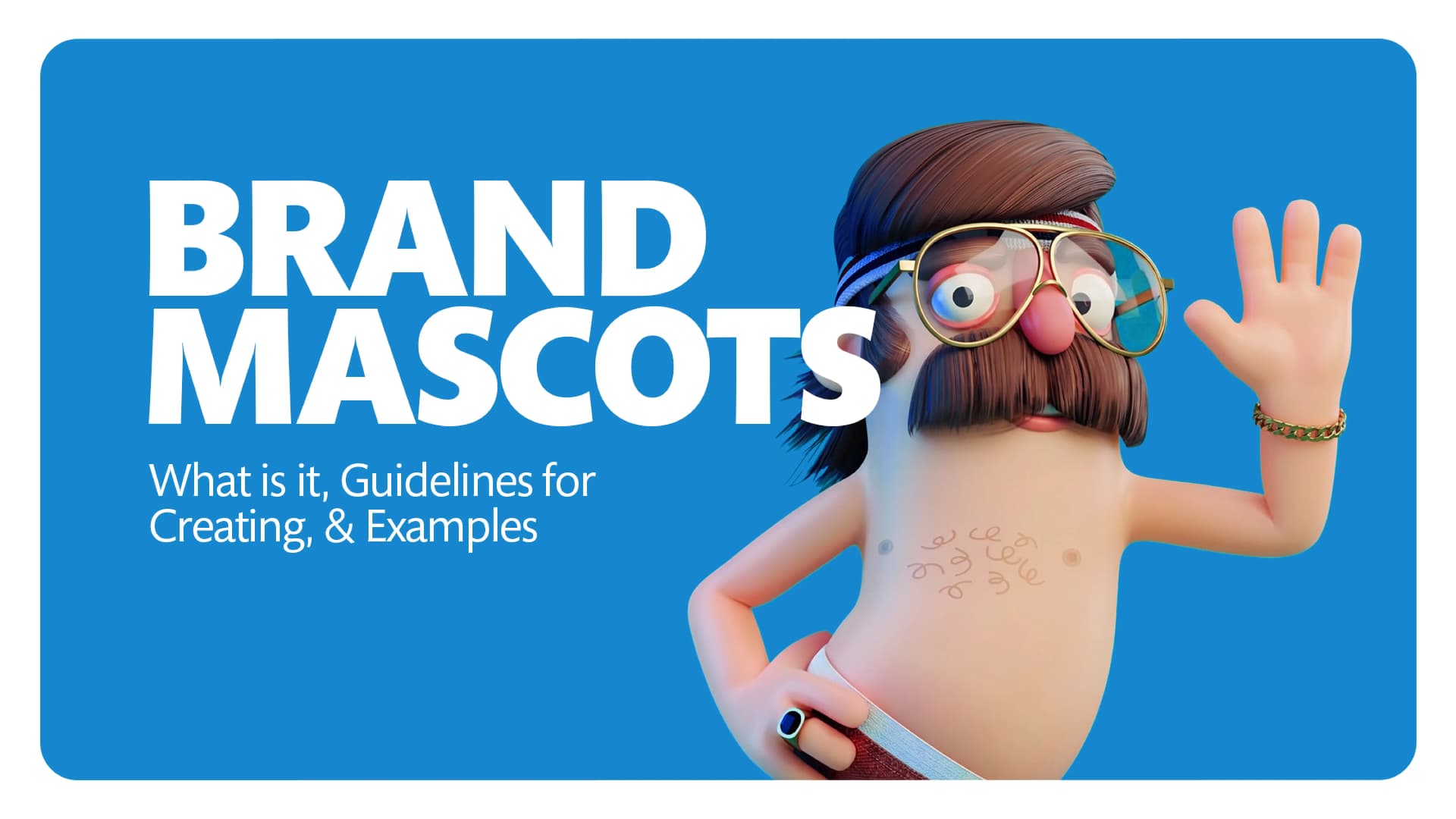
If you see a playful green parrot in your notifications with encouraging messages, you may instantly think about Duolingo. These characters are called mascots.
A good mascot is more than a character. It gives a brand personality and helps us connect with it. For instance, Pillsbury’s Poppin’ Fresh was adorable, while Fido Dido of 7Up was the ultimate king of chill. Sometimes, you won’t even know the brand’s name but would remember the mascot.
But you may be wondering: what makes a mascot memorable, and how can you create one for your brand? Let’s walk you through it.
What are Brand Mascots?

Brand Mascots are characters that express the brand’s narrative more interactively. It is different from a logo. While logos are the primary visual identifier, mascots are recognisable characters that tell the brand’s story.
Mascots are there to give the brand a human presence. They have personality, emotions, expressions, and even a voice that the audience connects with more easily. The mascots are a living body for the brand’s story. Customers can touch, talk to, wave at, or even hug the mascot.
This promotes a personal connection with the brand. These visual representations of the brand are easier to recall.
Why Brand Mascots are Important
Now that you know what mascots are, let’s list why you, as a brand, need one.
- Promotes Brand Personality: As a customer, you know how brand mascots stay with us. Your customers easily resonate with your brand values when portrayed in a living body.
- Easier to remember: Think about the animated Colonel Harland Sanders for KFC. We knew the brand in the first place because of an old guy saying “so good” with a chicken in his hand, and we still remember it. Mascots have a long-term imprint on your customers’ memory.
- Emotional Connection: People naturally connect with characters. A mascot can be funny, friendly, mischievous, or even quirky. It makes the brand feel more human.
- Marketing content becomes more engaging: As Chelsea Gladden, CEO of Everything Branding, says, having a brand mascot opens several social media marketing opportunities to promote the brand.
- Brands Stand Out: A Grimace milkshake, launched by McDonald’s, boosted global sales by more than 11% as people in TikTok videos pretended to die after having it.
Brand Mascots Guidelines: What to Keep in Mind
Creating a Mascot is not sketching a cute character and putting your logo on it. Think of the official mascot of Red Bull, REDD. It is a red coloured bull showing aggression and energy-properties of an energy drink. So, your mascot should tell your brand’s story in a subtle and humanised way.
Here are some basic guidelines you should keep in mind.
1. It should reflect the brand’s personality.
Ask yourself: if your brand were a person, what would he be like? Playful? Bold? Quirky? Funny? Serious? Caring? Your mascot should have those qualities. If you answer the question, you will have something to talk about, rather than being abstract.
2. Shape the persona
Now think of physical attributes of the brand. Imagine it more like a concrete character. How would it be? You can choose an animal, a character, or an inanimate object and add distinct human qualities.
Let’s say my brand recycles deadstock and discarded fabrics. Then, I would design my mascot as a little piece of fabric with loose threads and mismatched patches.
He would be kind, caring, and loving. Will it look imperfect, right? That’s exactly what will talk about the brand. So, make sure your chosen character or inanimate object is talking about your brand.
3. Include personality in it
To connect with your audience, you need to add emotions to it. You can make them excellent storytellers with human-like expressions. They can narrate stories about the target audience or can relay the brand’s journey.
For instance, if we have to make a mascot for the Indian Brand “Suta”, it may look like a thread named Suti with a playful, curious, warm, and proud Indian persona.
They didn’t choose the mascot randomly. The thread is the fundamental object of a saree. Also, a saree feels like warmth, class, and Indianness.
4. Make it distinctive
Your mascot should be different from a cartoon character. You won’t want a character like Tom or Jerry representing your brand, right? There’s nothing wrong with it, but your brand itself is a character.
So, you can mix two characters to talk about your brand’s story. Better to think of an element that resonates with what you’re selling.
Examples of Brand Mascots
You yourself can probably think of many examples of mascots, and this proves the point. They have been an integral part of marketing for the last few years and have won the hearts of the audience. Some of them are as follows.
- Duracell’s Bunny
Remember that ad in our childhood where two bunnies used to run, one with a Duracell battery and another with something else? That imprint stayed.
The mischievous, playful pink bunny was a representation of quickness, energy, and endurance. These were the properties of the battery too. Above all these, the bunny became a part of our everyday life.
- M&M Talking Candies
Most of us first bought those M&M candies after those charming candy mascots appeared in ads. They also used to be in the grocery aisles, making it almost impossible to ignore.
Each candy colour has a look and personality, and customers resonated with that. Red is smart and charismatic, purple is beautiful (that’s why purple was a girl), green is sassy and supportive, and so on. You and I both know that we all had our favourite colours as per our personality.
- Michelin Man “Bibendum” by Michelin
A mummy-like white, happy, friendly, cuddly figure with round and inviting eyes is the Michelin Man, Bibendum. I went from not knowing anything about the brand to loving seeing the Michelin Man on tyres.
To many people like me, the brand was introduced after the mascot, the Michelin Man, was included in the marketing campaigns.
Conclusion
So, a great mascot is often more than just a character sitting beside the logo. It gives the brand a personality that often stays with people, even after years.
The key is to start with defining the brand’s story and let the mascot grow naturally from it. When the character feels authentic, it becomes an asset to the brand.
If you’re still feeling stuck about developing a mascot, feel free to hire a creative branding agency in Ahmedabad. Professional help can bring an outside perspective and turn your brand values into an authentic, memorable and compelling mascot.
FAQs
Q1. How can I create my own mascot?
Start by defining your brand’s personality, values and target audience. Turn it into a physical character. Give the mascot a distinctive voice, personality and recognisable look.
Q2. What are good mascot ideas?
It should be distinctive, memorable, flexible and closely connected to the brand’s identity.
Q3. How much does it cost to create a mascot?
The cost varies widely depending on the designer, complexity of the design, concepts and applications.