Conversational marketing is a dialogue-driven approach that replaces one-way advertising with real-time, personalised, two-way conversations.
Instead of asking prospects to fill long forms and wait for a callback, brands engage them through chat, messaging apps, SMS, and social channels to answer questions, qualify leads, and guide them toward a purchase.
So, what is conversational marketing in simple terms? It is marketing that feels like a helpful conversation rather than a sales pitch. A visitor asks a question, the brand responds with relevant information, and the interaction moves naturally toward the next step, whether that is a product recommendation, demo booking, quote, or checkout.
Why Conversational Marketing Matters
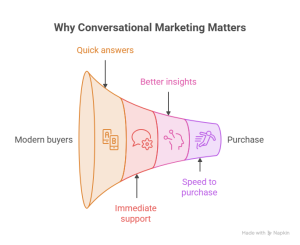
Modern buyers expect quick answers. They research on mobile, compare options across platforms, and often abandon a website when information is hard to find. Conversational marketing reduces that friction by meeting customers where they already are and giving them immediate, context-aware support.
It also helps businesses collect better insights. Every conversation reveals customer questions, objections, preferences, and buying intent – information that can improve targeting, product messaging, and sales follow-up.
The biggest advantage is speed. A well-designed conversation can shorten the path from interest to purchase by helping prospects get the right answer at the right moment.
Core Principles of Conversational Marketing
1. Two-Way Dialogue
Traditional marketing often broadcasts the same message to a large audience. Conversational marketing invites a response. Customers can ask questions, share requirements, choose options, and receive tailored guidance in return.
2. Customer-Centric Communication
The approach works across the customer’s preferred channels; website live chat, WhatsApp, Instagram DMs, Facebook Messenger, SMS, email, or voice. The goal is to make support and buying easier, not to force people into a single channel.
3. Personalisation and Context
A good conversation is relevant to the person having it. Brands can use behaviour, location, past purchases, browsing history, and lifecycle stage to suggest the most useful next step.
4. Speed With Human Support
AI chatbots can handle FAQs, route enquiries, and capture leads around the clock. But complex, high-value, or sensitive queries should move smoothly to a human agent. The best systems combine automation with real human empathy.
Common Conversational Marketing Examples
| Example | How It Works |
| Website chatbot | Greets visitors, answers FAQs, recommends products, and qualifies leads 24/7. |
| Live chat | Connects high-intent visitors with sales or support agents in real time. |
| WhatsApp marketing | Sends order updates, product recommendations, appointment reminders, and answers customer queries in a two-way chat. |
| Social media DMs | Lets customers ask about pricing, availability, delivery, or offers directly on Instagram or Messenger. |
| Conversational SMS | Invites replies instead of sending one-way promotional blasts – for example, “Reply 1 for pricing” or “Reply STOP to unsubscribe.” |
| AI voice assistants | Helps customers check order status, book appointments, or find information through spoken conversations. |
For example, an online furniture store can use a website chatbot to ask whether a visitor is shopping for a home or office. Based on the answer, it can show relevant sofas, share delivery timelines, and offer to connect the visitor with a design consultant.
How to Build a Conversational Marketing Strategy
A practical conversational marketing strategy does not begin with buying a chatbot. It begins with understanding your customers and mapping the conversations that will help them buy with confidence.
1. Define Your Goal
Decide what you want conversations to achieve: more qualified leads, faster customer support, higher checkout completion, repeat purchases, or better lead qualification. Clear goals help you choose the right tools and metrics.
2. Choose the Right Channels
Identify where your audience already spends time. In India, WhatsApp is often a high-impact channel because customers can ask questions, receive updates, browse products, and complete transactions within one familiar app.
A B2B company may prioritise website live chat and LinkedIn messaging, while an ecommerce brand may focus on WhatsApp, Instagram DMs, and onsite chat.
3. Map the Buyer Journey
Align conversation triggers with each stage of the funnel:
- Awareness: Answer basic questions and share helpful resources.
- Consideration: Compare products, explain pricing, and address objections.
- Decision: Offer demos, quotes, consultations, or checkout support.
- Post-purchase: Send order updates, onboarding guidance, and feedback requests.
4. Combine AI and Human Agents
Use AI for repetitive tasks such as answering FAQs, collecting contact details, booking meetings, and routing enquiries. Transfer conversations to human agents when the query becomes complex or the prospect shows strong buying intent.
This balance prevents customers from feeling trapped in an unhelpful bot loop while still allowing your team to scale support.
5. Segment and Personalise
Do not send the same message to every contact. Segment audiences by behaviour, purchase history, lifecycle stage, location, and channel preference. Then tailor the opening question, recommendations, and follow-up messages accordingly.
6. Measure and Improve
Track metrics that show whether conversations are actually driving results:
- Response time
- Conversation-to-lead conversion rate
- Lead-to-meeting or lead-to-sale rate
- Customer satisfaction score
- Chat abandonment rate
- Revenue influenced by conversational channels
Review chat transcripts regularly. They often reveal missing product information, unclear pricing, common objections, and opportunities to improve automation.
Best Practices for Better Conversations
- Be clear about whether the customer is speaking with a bot or a human.
- Keep messages short, friendly, and easy to act on.
- Offer quick-reply options, but always allow free-text questions.
- Avoid asking for too much information too early.
- Make human handover simple and immediate when needed.
- Respect privacy and use opt-in messaging, especially on WhatsApp and SMS.
- Test conversation flows before launching them live.
Final Thoughts
Conversational marketing is not just about adding a chat widget to a website. It is about creating a faster, more human buying experience through relevant, two-way conversations.
When done well, it helps brands engage prospects, qualify leads, improve customer support, and turn interest into action. A branding agency in India can help businesses align these conversations with their brand identity.
Start small: choose one high-intent channel, map the most common customer questions, automate the basics, and keep human agents available for meaningful conversations. Over time, use conversation data to refine your messaging and make every interaction more useful.