




Digital communication has become increasingly saturated with visual stimuli instigating brands to look for alternative ways to capture customer’s attention and create lasting impressions. Sonic Branding emerged as a response to this challenge, allowing corporations to communicate via sound also. The contemporary technological environment defined by an unprecedented Artificial Intelligence boom has enabled sonic branding to extend beyond catchy jingles into a sophisticated data-driven strategy that helps companies to build strong emotional connections, enhance recall and create an immersive customer experience. As a result, many businesses are partnering with a digital branding company to create more engaging and memorable brand experiences.
Sound has become an essential part of contemporary media consumption. Consumers are connected to audio information daily, whether it’s by a voice assistant or a podcast, a streaming service or a mobile app. Therefore, brands which create a unique sonic identity are now set to gain distinctiveness in a saturated market.
WHAT IS SONIC BRANDING?
Sonic Branding is the strategic use of sound to convey a brand’s identity, personality, values and ethics. Akin to visual branding which makes use of logos, typography and colour schemes, sonic branding utilises voice designs, music motifs and audio signature for differentiation and recognition.
Often referred to as “acoustic branding,” sound branding or music branding is more than just jingle. While a jingle constitutes only one element of sonic identity, a sonic branding strategy includes all forms of audio connections between a brand and its audience.
These interactions include getting notifications on mobile apps, sounds on websites, customer service, listening to podcasts or digital interactions.
What is Sound Logo?
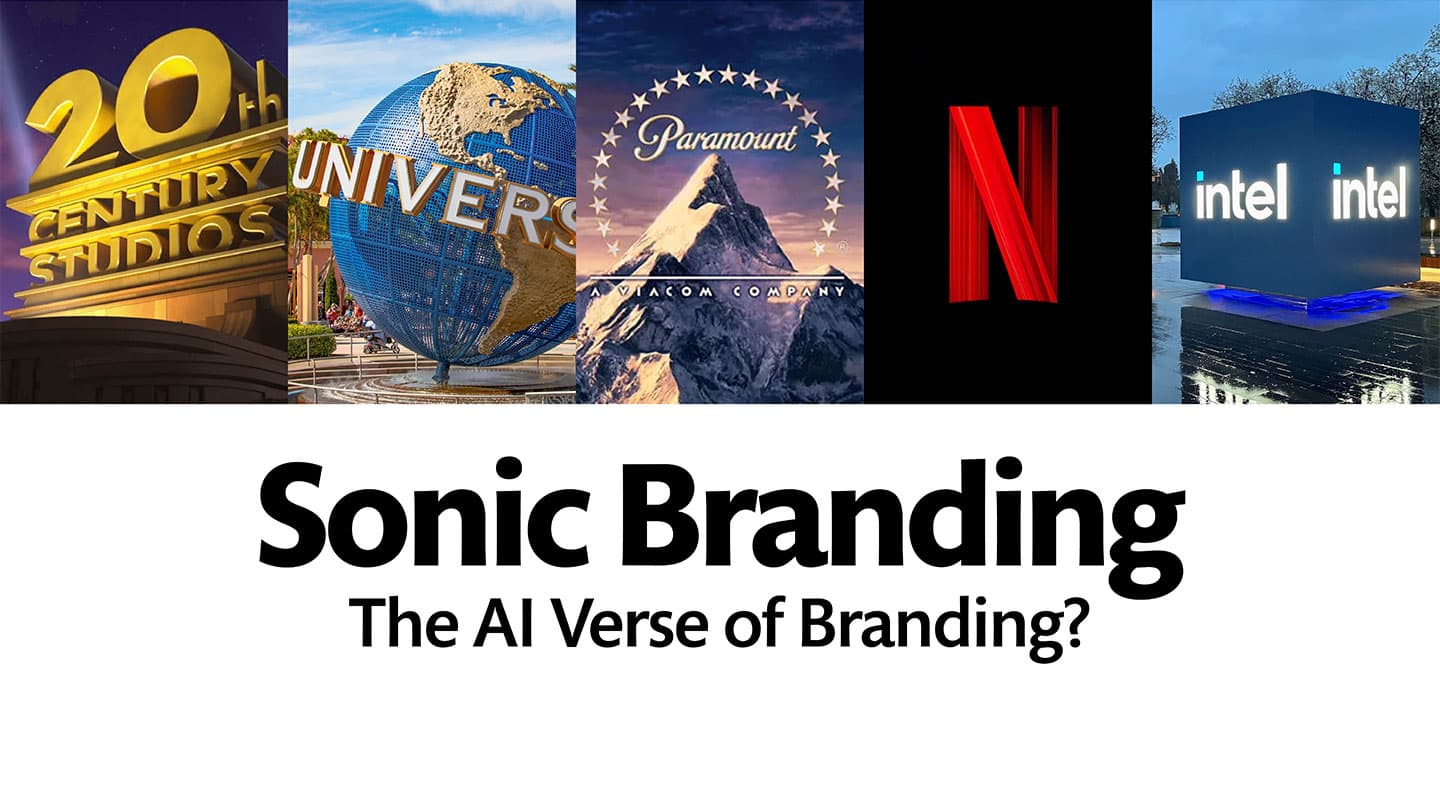
Sound Logo constitutes one of the most integral elements of sonic identity. It is also referred to as sonic logo or audio logo. A sound logo is a distinctive auditory signature that represents a brand in the same way as a visual logo does.
The effectiveness of a sound logo resides in its ability to communicate complex brand associations within a few seconds. Unlike conventional advertising messages which oftentimes require active attention, sound logo functions on a subconscious level.
WHY IS SOUND SO IMPORTANT?
The escalating relevance of Sonic Branding can be attributed to two major factors: technological and psychological.
Research in neuroscience indicates that music triggers several areas that are related to movement, emotion and memory. This makes sound an excellent tool for changing perceptions and behaviors.
Consumers increasingly engage with brands through smart speakers, virtual assistants, streaming platforms, and conversational interfaces. In these environments, sound often becomes the primary means through which a brand is experienced.
Artificial Intelligence is accelerating this transformation. AI-powered tools can analyse audience preferences, identify emotional responses to specific sounds, and generate adaptive auditory experiences tailored to different consumer segments resulting in brands to move towards more personalized and data-informed sound strategies than ever before.
EXAMPLES OF SONIC BRANDING
Let’s look at some of the instances of Sonic Branding.
 Source
1. COCA- COLA
Coca-Cola has long demonstrated the power of auditory branding. Over decades of advertising campaigns, the company has indulged in uplifting musical themes that reiterate its image as a brand connected with happiness, joy, gala and shared unity and experience.
From their first Hilltop ad back in 1971 to 2024’s “It’s Gonna Be Me” spot, Coca-Cola’s got that friendly, welcoming thing nailed. They’re so confident in their sonic branding that they’ve even released their own musical instrument.
Coke SoundZ is both a physical and digital instrument that plays uplifting, chirpy sounds inspired by the drink.
2. APPLE
Apple provides another iconic and compelling example of sonic branding. Apple’s startup chime leitmotif is almost as iconic as the fruit logo itself.
It conveys luxury, aspiration, and the future. The tech giant carries this into other aspects of their sonic branding, carefully placing tracks to deliver that premium yet still relatable sheen.
As Josh Rabinowitz, music consultant and brand expert, told Epidemic Sound:
“The brands that have the most success in music are the ones built on long-term, expert partnerships, think of brands like Apple.
A long-term music partnership means your music partner gets to know your brand inside-out, translating that intimate knowledge into musical output.”
Conclusion
The increasing prevalence of Sonic Branding shows a shift from visual to multisensory communication. AI is accelerating this transformation by enabling adaptive, data-informed, and highly personalized auditory experiences.
However, its significance stretches beyond technological innovation, representing a fundamental recognition that sound is a powerful medium through which meaning, emotion, and memory are constructed.
FAQs
1. How is sound effective in Sonic Branding?
Sound activates cognitive responses more effectively, enhancing memory retention facilitating recognition.
2. Can AI be used in creating Sonic Brand identities?
AI can help generating, testing, and optimizing auditory assets but strategic direction and authenticity remain crucial human contributions.
3. Which industries benefit the most from Sonic Branding?
Hospitality, technology, entertainment and digital platforms mostly benefit from creating strong and effective sonic identities because of their extensive customer interaction across multiple media channels.