





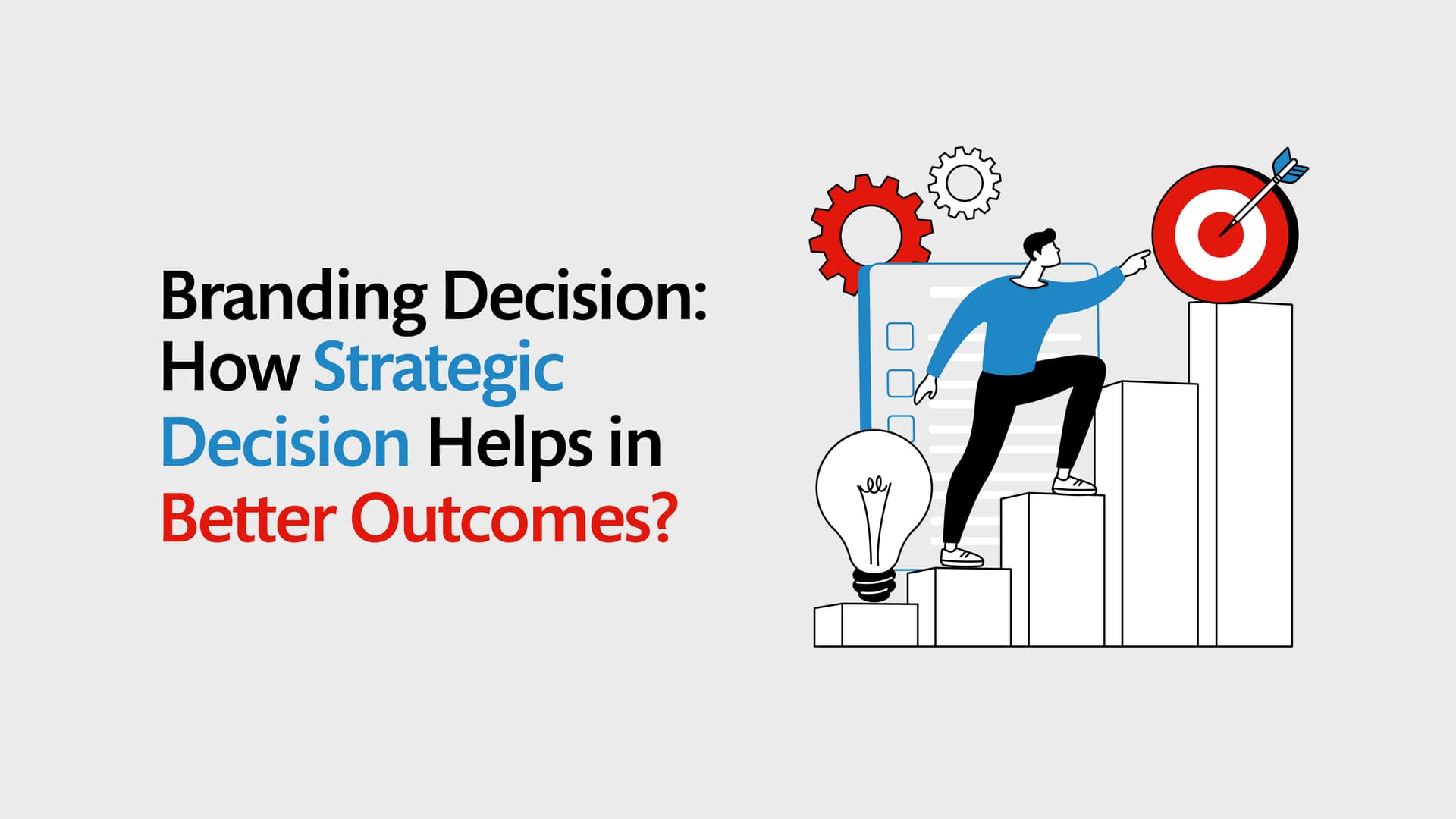
At some point every founder realises the logo, tone and overall feel of the business needs to change. How you handle that moment speaks volumes about where the company ends up.
That’s a branding decision, and whether you treat it as an afterthought or something you actually plan for tends to decide whether your next few years feel steady or chaotic.
In this post we walk you through what that decision actually involves, how to build a real strategy around it, and why the process matters more than most people assume going in.
What is a Branding Decision?

A branding decision is any choice that shapes how people perceive your business, your name, your colours, your tone, even the kind of language you use in customer email.
It sounds small written out like that but each one adds up, and together they decide whether your brand feels like one coherent thing or five different businesses wearing the same logo.
You make these kinds of decisions whether you know it or not. You don’t get to choose. You can do them on purpose, with some thought behind them, or you can have them done by accident, because nobody was paying attention. Getting back to the essence of what is a branding decision, it’s simply the sum of all of those decisions, conscious or unconscious.
Branding Decision Strategy: Getting the Approach Right
The strategy for making a good branding decision strategy is not a one-and-done document. It’s more of a filter that you put every choice through: Does this match who we really are, does this match what we told our customers to expect, and does it hold up a year from now, not just this quarter?
A few things a solid branding decision strategy usually covers:
- A clear sense of what your business stands for, beyond just the product you sell
- Who’s actually allowed to make brand-level calls, so it’s not decided by whoever’s loudest in the room
- A way to test a change before rolling it out everywhere at once
- Some room to revisit decisions later without treating every past choice as permanent
Short-Term Pressure vs Long-Term Identity
You’ll feel pulled toward whatever gets attention right now, a trending colour palette, a competitor’s tagline, a quick rebrand because sales dipped last month. A real strategy is what keeps you from chasing every one of those, because most of them don’t actually serve where you’re trying to go.
Branding Decision Process: Step by Step
Once you’ve got a strategy, you need an actual branding decision process to run each choice through, or the strategy just sits there unused.
Step 1: Get the Research First
Before you decide anything, you need to know how people currently see you not how you assume they see you. Surveys, reviews, even a few honest conversations with existing customers usually reveal more than you’d expect.
Step 2: Test Before You Commit
A new tagline on one campaign, colour tweak on one page, small tests, these tell you far more than guessing ever will. You want to see how real people react, not what your team thinks they would do in a meeting.
Step 3: Roll It Out Consistently
Once you’ve tested and you’re confident, apply it everywhere, your website, your packaging, your emails, your social presence. Half-finished rollouts are usually where brand confusion actually comes from.
Why This Actually Improves Your Outcomes
Get your branding decision process right and a few things tend to follow:
- Customers recognise you faster, across more places, without extra effort from you
- Your team stops second-guessing every small choice because there’s already a filter for it
- You waste less money on rebrands and reversals, since you tested before committing
- Trust builds faster because your business looks and sounds the same everywhere someone encounters it
The numbers back this up too. Marq’s State of Brand Consistency Report found that companies maintaining consistent branding across every touchpoint can see revenue climb by as much as 33%, yet the same research found that over 80% of companies still regularly ship content that doesn’t match their own brand guidelines, which is usually a process problem, not a talent one.
Where a Branding Company Fits In
You don’t have to work all this out by yourself. A branding company can provide an outside perspective that you just can’t get from inside your own business, because it’s hard to see your own brand clearly when you’re the one living inside it every day.
A good branding company will also push back on decisions that feel comfortable but don’t actually serve your long-term identity, which is usually more valuable than anything they hand you in a deck.
If you’re a small team making your first big branding decision, or a growing company rethinking an identity that’s outgrown itself, the process is more important than any one decision within it.
At this point, hiring a branding company is often what transforms that nebulous feeling that “we need a rebrand” into something you can actually act upon.
Conclusion
A branding decision isn’t one big moment, it’s dozens of smaller moments made consistently over time. The things that really matter are:
- Build a strategy before you need one, not during a crisis
- Follow an actual process instead of deciding case by case
- Bring in outside eyes when you can’t see your own blind spots anymore
- Stay consistent once you’ve tested and committed to a direction
Get that right, and your business stops looking like it’s guessing. It starts looking like it knows exactly what it is.
FAQs
Q1. What exactly counts as a branding decision?
Anything that shapes how people perceive your business, your name, visuals, tone, even how your team responds to customers. That’s really what the branding decision comes down to, it’s broader than just a logo or colour scheme.
Q2. Can you make good branding decisions without the help of a company?
You can start it yourself, but usually an outside team catches the blind spots that you stop noticing after working inside your own brand every day.
Q3. What’s the biggest mistake businesses make in the branding decision process?
Skipping testing. Most expensive backfires come from deploying a big change everywhere at once without first seeing how real customers respond.
Q4. Does a small business really need a formal branding decision process?
Yes, arguably more than a large one, since small businesses have less room to recover from an inconsistent or confusing identity.